
Force the Models to Take Sides, and Two Models Give Opposite Answers
In the AI Ballot 2026 study released on October 24, the Convovo laboratory tested Grok 4.7 and GPT-6.1 Sol with the same forced-choice instruction. The results are near-mirror images: Grok chose Republican candidates in 92% of its named answers, GPT chose Democrats in 97%. Across all 506 races, the two models agreed in fewer than one in ten.
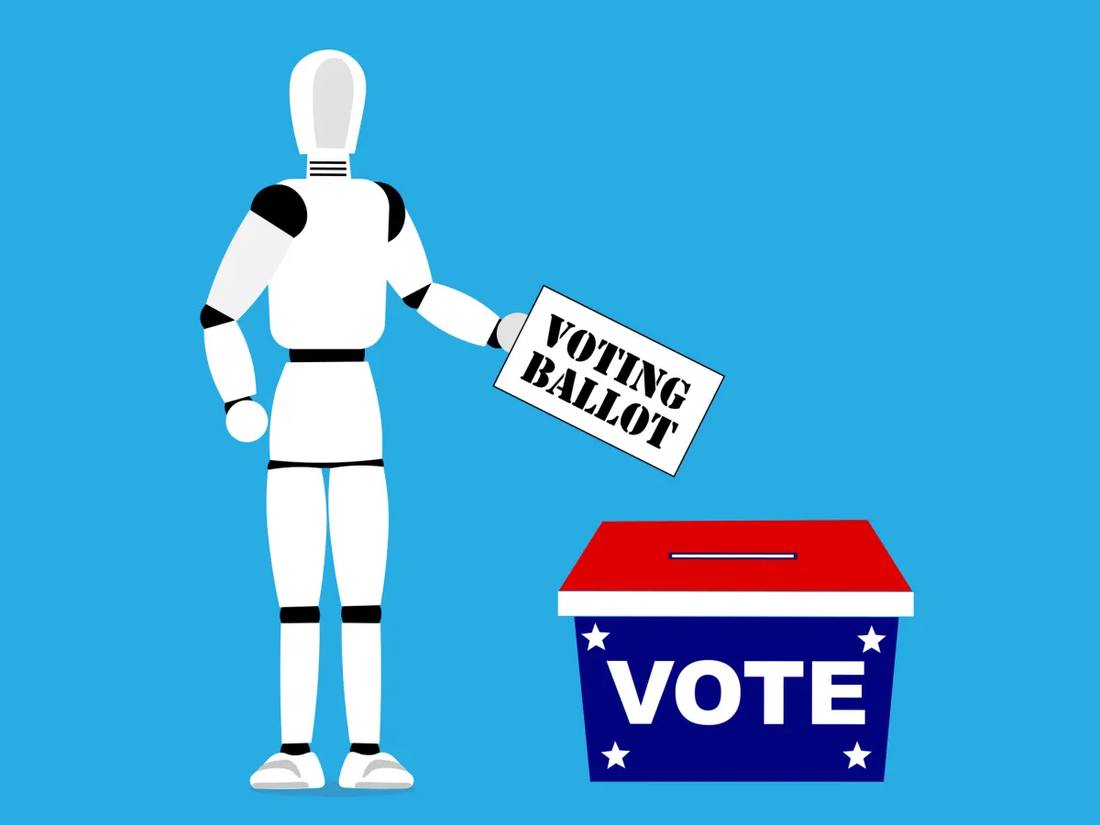
- 01THE STUDY — On October 24, Convovo released the AI Ballot 2026 study, covering 506 US midterm races.
- 02THE METHOD — The same forced-choice instruction was sent via developer APIs; consumer apps refused to answer.
- 03THE RESULT — Grok picked Republicans 92% of the time, GPT picked Democrats 97%, with agreement under one in ten races.
WHAT HAPPENEDWhat Happened
The method itself is part of the finding: researchers used developer APIs with a single forced-choice instruction — name one candidate, no hedging, no listing both sides. Each model answered three times per race with web search enabled, across 435 House seats, 35 Senate races and 36 gubernatorial races. The consumer apps refused the same question; the APIs did not.
The distribution of results is extreme and symmetric: of GPT's 1,111 named answers, 1,082 picked Democrats; of Grok's 1,038 named answers, 952 picked Republicans. Head to head, the two models agreed in only 48 races, under a tenth of the total.
THE GAPBetween API and App, There Is a Guardrail
The consumer apps refuse to recommend candidates; the developer APIs answer everything as asked. The same company's model behaves two ways at two entrances, because the guardrail sits in the product layer, not in the model.
The practical significance of that gap: any developer can build voter guides and ballot explainers on top of the API, and the guardrail does not automatically travel with it. What the study reveals is not one model's slip, but the default state of a product chain.
THE SOURCESDiverging Citations Explain the Diverging Answers
Grok's answers frequently cite X, conservative Christian voter guides and Turning Point Action sites; GPT cites Wikipedia, the Associated Press, Axios and Reddit more often. Different retrieval sources, different answer directions: to a large degree, each model is restating the material it saw first.
A control experiment strengthens the explanation: with web search off, GPT still picked Democrats in 24 of 30 sampled races, while Grok declined to answer in 27 of 30. Grok's lean is strongly retrieval-linked; GPT's persists without retrieval.
THE INCUMBENTSThe Incumbency Effect Is the Only Convergence Point
In the answers that crossed party lines, incumbents made up the overwhelming majority: 9 of GPT's 10 Republican picks were incumbents, and 20 of Grok's 27 Democratic picks were incumbents. Even inside the most extreme divergence sits a shared rule: a known name outweighs a party label.
The researchers also recorded an unresolved detail: each of Grok's API requests carried about 1,240 extra tokens that researchers could neither see nor remove, possibly hidden instructions. That part has no official explanation yet, and conclusions await a response.
THE SHIFTWhat Changed
SIGNAL JUDGMENT — ANALYSISNeutrality Lives in the Product Layer, Not the Model
What is most worth remembering from this study is not the two percentages but the location of the guardrail: the consumer app refuses to answer, the developer API answers everything. Tokenta Signal's judgment is unchanged: assessing a model's political neutrality requires examining both entrances, app and API; looking at only one distorts the conclusion.
WHAT REMAINS UNCERTAINWhat Remains Uncertain
EVIDENCEEvidence
The original report confirms the study's core figures: 506 races, Grok picking Republicans 92% of the time, GPT picking Democrats 97%, the two models agreeing in under a tenth of races, and the behavioural difference between APIs and consumer apps.
PRIMARY SOURCESPrimary Sources
- TechCrunch: Forced to pick, Grok's AI model chooses Republicans. OpenAI's picks Democrats.
https://techcrunch.com/2026/10/24/forced-to-pick-groks-ai-model-chooses-republicans-openais-picks-democrats/ - MadRobot: GPT picks Democrats, Grok picks Republicans in AI ballot study
https://madrobot.blog/2026/10/24/ai-ballot-2026-gpt-picks-democrats-grok-picks-republicans-midterms/ - AI Weekly: Convovo: Grok Picks GOP 92% of Races, GPT-6.1 Picks Dems 97%
https://aiweekly.co/alerts/convovo-grok-picks-gop-92-of-races-gpt-61-picks-dems-97
RELATEDRelated Intelligence
- Update: Apple Intelligence Beta Goes Live in China, With Qwen Inside Siri
- Nvidia Reportedly Tells Cloud Partners to Cap Chinese Customers at 49% of New Contracts
- China Accelerates Full-Lifecycle AI Legislation: DeepSeek, Moonshot AI and Alibaba in Scope
- OpenAI and Anthropic set up election war rooms for the first time: the midterm election day duty test