
Facts first
Reporting and analysis are kept apart on every page. Sources and uncertainty are stated, not buried.
Microsoft is winding down an arrangement to rent AI computing capacity from Oracle after declining to renew the contract, Bloomberg News reported on November 6, 2026, in a story carried by Reuters. Microsoft has been turning off the rented capacity in recent months as part of a larger reassessment of billions of dollars in cloud partnerships. The capacity, supplied under a 2023 multi-year deal for AI-assisted Bing, used an older generation of Nvidia chips and no longer met Microsoft's evolving needs. Oracle said demand for its AI infrastructure remains strong, including for earlier-generation GPUs, and that renewed capacity fetched a 20% premium.
 TeraWulf's AI Leases Now Drive 83% of Revenue as Bitcoin Mining FadesTeraWulf reported third-quarter 2026 revenue of $76.2 million on November 6, 2026, up 51% year over year, with high-performance computing lease revenue of $63.0 million, about 83% of the total, while bitcoin mining revenue fell 69% to $13.2 million. Net income of about $709.9 million was driven by a $728.4 million non-cash warrant fair-value gain, and adjusted EBITDA was negative $12.8 million. Lake Mariner has 102 MW of revenue-generating capacity online with 336 MW under construction, and the 20-year, roughly $19 billion Anthropic lease at the Justified campus now carries a Google credit backstop and a definitive Fluor construction agreement.
 An Unreleased Anthropic Model Proved an 18-Year-Old Quantum Conjecture, Machine-Checked in LeanPhysical Superintelligence announced on November 6, 2026 that a research system it developed internally, running instances of a non-public Anthropic model, found a proof of the Aaronson-Ambainis conjecture, a central question in quantum computing open since 2008. The system produced a complete proof during the third day of its run, the Lean proof assistant verified every step, and the result was improved twice. The manuscript and the Lean formalization are public, the proof has not been peer reviewed, and the Stanford researchers who settled a special case in August 2026 are reading it and writing a shorter exposition for experts.
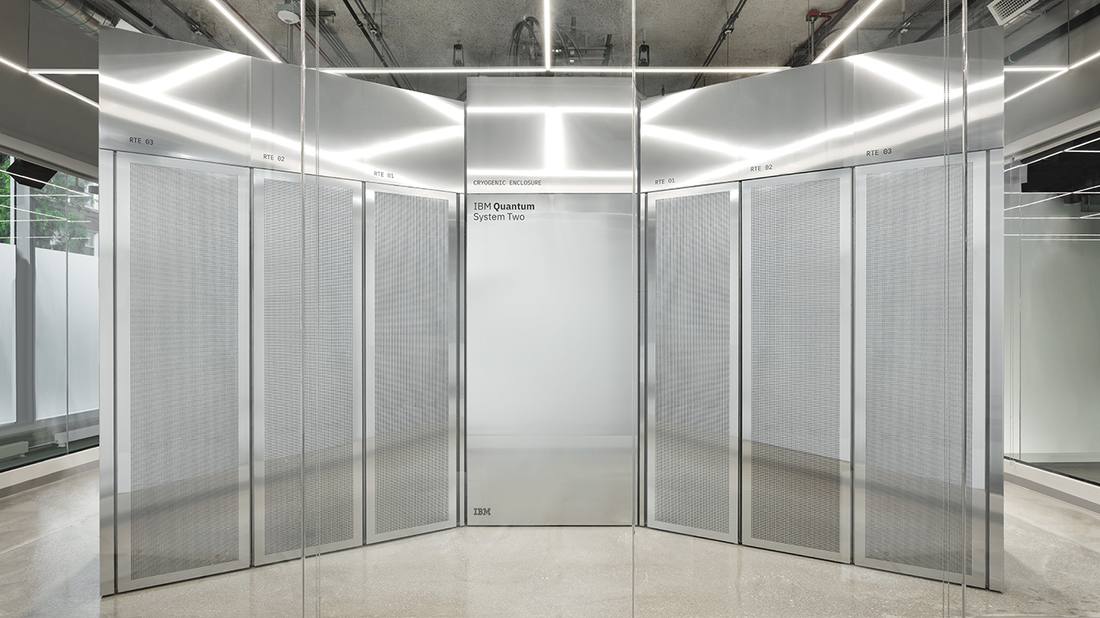 IBM Unveils Quantum System Two in Chicago, Its Most Advanced Computer Yet, Powered by NighthawkIBM unveiled its most advanced quantum computer, IBM Quantum System Two, in Chicago on November 6, 2026, the company's first system in Illinois, now operational at the University of Chicago's Hyde Park Labs. Powered by the Nighthawk chip, which IBM calls the most powerful quantum chip it has ever built, the system anchors the National Quantum Algorithm Center and will move to the Illinois Quantum and Microelectronics Park when that campus is complete. The state backed the deployment with a $25 million grant, and IBM's FutureNow Chicago center is set to bring 750 jobs to the region.
 Oklo Posts First Revenue of $1.86M as Q3 Loss Widens to $41.7M, Liquidity Hits $3.13BOklo posted its first revenue of $1.86 million in the third quarter of 2026, from services at the ARMEC and CEI businesses acquired in June, while the net loss widened 40.5% to $41.75 million, or $0.22 per share, narrower than the roughly $0.24 to $0.27 loss analysts expected. Liquidity reached $3.13 billion after the company issued 32.6 million shares for $2.25 billion in net proceeds in the first nine months. The Groves Isotope Test Reactor achieved first criticality in August 2026, the DOE approved the Aurora-ID safety analysis in June, and the 12 GW Switch master power agreement and Meta prepayment framework stand behind the 2028-2029 deployment targets.
| WORLD & POLICY | 14 |
| MARKETS & INDUSTRY | 72 |
| AI FRONTIER | 106 |
| ROBOTICS & AI | 16 |
| WEB3 INFRASTRUCTURE | 4 |
| RESEARCH & SCIENCE | 5 |
Microsoft Winds Down Its Oracle AI Cloud Rental as Older Nvidia Chips Fall BehindMicrosoft is winding down an arrangement to rent AI computing capacity from Oracle after declining to renew the contract, Bloomberg News reported on November 6, 2026, in a story carried by Reuters. Microsoft has been turning off the rented capacity in recent months as part of a larger reassessment of billions of dollars in cloud partnerships. The capacity, supplied under a 2023 multi-year deal for AI-assisted Bing, used an older generation of Nvidia chips and no longer met Microsoft's evolving needs. Oracle said demand for its AI infrastructure remains strong, including for earlier-generation GPUs, and that renewed capacity fetched a 20% premium.TeraWulf's AI Leases Now Drive 83% of Revenue as Bitcoin Mining FadesTeraWulf reported third-quarter 2026 revenue of $76.2 million on November 6, 2026, up 51% year over year, with high-performance computing lease revenue of $63.0 million, about 83% of the total, while bitcoin mining revenue fell 69% to $13.2 million. Net income of about $709.9 million was driven by a $728.4 million non-cash warrant fair-value gain, and adjusted EBITDA was negative $12.8 million. Lake Mariner has 102 MW of revenue-generating capacity online with 336 MW under construction, and the 20-year, roughly $19 billion Anthropic lease at the Justified campus now carries a Google credit backstop and a definitive Fluor construction agreement.An Unreleased Anthropic Model Proved an 18-Year-Old Quantum Conjecture, Machine-Checked in LeanPhysical Superintelligence announced on November 6, 2026 that a research system it developed internally, running instances of a non-public Anthropic model, found a proof of the Aaronson-Ambainis conjecture, a central question in quantum computing open since 2008. The system produced a complete proof during the third day of its run, the Lean proof assistant verified every step, and the result was improved twice. The manuscript and the Lean formalization are public, the proof has not been peer reviewed, and the Stanford researchers who settled a special case in August 2026 are reading it and writing a shorter exposition for experts.IBM Unveils Quantum System Two in Chicago, Its Most Advanced Computer Yet, Powered by NighthawkIBM unveiled its most advanced quantum computer, IBM Quantum System Two, in Chicago on November 6, 2026, the company's first system in Illinois, now operational at the University of Chicago's Hyde Park Labs. Powered by the Nighthawk chip, which IBM calls the most powerful quantum chip it has ever built, the system anchors the National Quantum Algorithm Center and will move to the Illinois Quantum and Microelectronics Park when that campus is complete. The state backed the deployment with a $25 million grant, and IBM's FutureNow Chicago center is set to bring 750 jobs to the region.Oklo Posts First Revenue of $1.86M as Q3 Loss Widens to $41.7M, Liquidity Hits $3.13BOklo posted its first revenue of $1.86 million in the third quarter of 2026, from services at the ARMEC and CEI businesses acquired in June, while the net loss widened 40.5% to $41.75 million, or $0.22 per share, narrower than the roughly $0.24 to $0.27 loss analysts expected. Liquidity reached $3.13 billion after the company issued 32.6 million shares for $2.25 billion in net proceeds in the first nine months. The Groves Isotope Test Reactor achieved first criticality in August 2026, the DOE approved the Aurora-ID safety analysis in June, and the 12 GW Switch master power agreement and Meta prepayment framework stand behind the 2028-2029 deployment targets. Vistra Posts $1.14B Q3 Profit as Power EBITDA Jumps Over 50%, Lifts 2026 OutlookVistra reported third-quarter 2026 net income of $1.14 billion, up from $652 million a year earlier, with Ongoing Operations Adjusted EBITDA up more than 50% to $2.378 billion on higher realized energy and capacity prices. The company raised and narrowed 2026 guidance to $7.1 billion to $7.5 billion of adjusted EBITDA and initiated 2027 guidance of $7.7 billion to $8.5 billion. It closed the Cogentrix acquisition, adding about 5,500 MW of natural gas generation, started the Microsoft-backed Pulaski Solar plant, and authorized another $1.5 billion of share repurchases. More than $550 million of the headline profit is an unrealized hedge gain.
 Moderna Swings to $162M Profit as Q3 Revenue Hits $1.31B, Crushing EstimatesModerna reported third-quarter 2026 revenue of $1.31 billion, up 29% year over year and far above the $885.1 million analysts expected, swinging to net income of $162 million, or $0.38 per share, against a $200 million loss a year earlier. The company raised full-year 2026 revenue growth guidance to 15% to 25% from up to 10% and lifted its year-end cash outlook to $8.1 billion to $8.3 billion. The FDA-approved flu vaccine mFLUSIVA and the Phase 3 melanoma vaccine intismeran autogene, which cut recurrence-or-death risk by 42%, are the pipeline drivers ahead.
 OpenAI Launches GPT-6 Cyber, a Critical-Rated Model That Found 81 Firefox Flaws and 948 Linux ExploitsOpenAI launched GPT-6 Cyber on November 5, 2026, a specialized cybersecurity model scoring 48.5% on ExploitGym, up from 32.1% for GPT-5.6 Cyber, and rated Critical under its Preparedness Framework. The model found 81 previously unknown high-severity Firefox vulnerabilities and developed working exploits for 948 Linux kernel flaws. Access is initially limited to select approved Daybreak Red customers, with a $1 billion grant program for frontline defenders.
 Monster Q3 Sales Hit a Record $2.56B on International Growth, but Margins Squeeze SharesMonster Beverage reported third-quarter 2026 net sales of $2.563 billion, up 16.7% year over year to a record, beating the roughly $2.49 billion analysts expected, according to reports on the company's results released after the market close on November 5, 2026. Net income rose 8.4% to $568.4 million, diluted earnings were $0.29 per share, and adjusted earnings of $0.30 matched consensus. International sales rose 28.1% to $1.20 billion, or 47% of total revenue, with Latin America up 49%. Gross margin slipped to 54.7% from 55.7%, and shares fell 6.2% in after-hours trading.
 BILL Q1 Profit Beats, but an Accounting Change Makes Revenue Look Like a MissBILL Holdings reported fiscal first-quarter 2027 total revenue of $353.8 million, up 13% year over year, and core revenue of $316.4 million, up 14.3%, according to the company's official results released after the market close on November 5, 2026. Non-GAAP earnings were $1.18 per share, beating the $0.98 consensus, and GAAP net income was $60.3 million versus a $3.0 million loss a year earlier. The apparent revenue miss against the $438.7 million consensus is an accounting-presentation artifact: card rewards are now recorded as a reduction of revenue. Management raised full-year profit guidance, with non-GAAP operating income now expected at $466 million to $486 million.
 Affirm Q1 Revenue Jumps 35% to $1.26B, but Delinquencies Push Shares DownAffirm Holdings reported fiscal first-quarter 2027 revenue of $1.262 billion, up 35% year over year, beating the roughly $1.213 billion analysts expected, according to reports on the company's results released after the market close on November 5, 2026. Earnings were $0.47 per share, up 104% from a year earlier and above the $0.35 consensus, while gross merchandise volume rose 34% to $14.4 billion. Loans 30 or more days past due rose 35 basis points sequentially to 2.9%, and shares fell more than 9% in after-hours trading. The company forecast second-quarter gross merchandise volume of $17.9 billion to $18.2 billion, above estimates.
 DraftKings Q3 Loss Widens as It Slashes 2026 Outlook to Fund Prediction MarketsDraftKings reported third-quarter 2026 revenue of $1.329 billion, up 16% year over year but below the roughly $1.40 billion analysts expected, according to the company's official results release published through Business Wire on November 5, 2026. The net loss widened to $468.7 million, or $0.94 per share, and adjusted EBITDA swung to a loss of $316.9 million. The company cut its full-year 2026 adjusted EBITDA guidance to $175 million to $275 million, down from $700 million to $900 million, to fund a $650 million to $700 million push into prediction markets. Shares fell 24% in after-hours trading.
Policy, geopolitics and macro forces — the events that move the map.
OPEN DESK → · 14 REPORTS02Capital, deals and industry structure, with every number sourced.
OPEN DESK → · 72 REPORTS03Models, agents and compute — verified against primary sources before publication.
OPEN DESK → · 106 REPORTS04Humanoids, embodied AI and automation — real deployments, not demos.
OPEN DESK → · 16 REPORTS05Blockchain infrastructure and industry facts. No investment advice.
OPEN DESK → · 4 REPORTS06Papers, labs and frontier science, with the limits of each claim stated.
OPEN DESK → · 5 REPORTSOne sponsor slot per cycle across the briefing and the homepage. Pricing steps up with real traffic. Audience numbers are never inflated.
Reporting and analysis are kept apart on every page. Sources and uncertainty are stated, not buried.
Key facts link back to the publishing institution and the original document, with page screenshots on file.
Each report carries a screenshot of its primary source. One click takes you to the original.
Events, timelines and entities are linked, so a headline becomes a position in a larger picture.
We monitor official announcements, filings, wire reporting and front-line social signals, then merge duplicate coverage of the same event.
Social posts are leads, never sources. Each event is confirmed against its primary source and a second independent report before publication.
Background, timelines and related entities are attached to every event, and follow-ups are published as updates to the same record.