
Complaint Over Tesla's FSD in South Korea: Only About a Fifth of Cars Can Legally Use It, Yet Fees Were Charged for Three Years
Reuters exclusive, November 4, 2026: a South Korean consumer group plans to complain to the Fair Trade Commission on Thursday, alleging Tesla has marketed FSD for years even though the software can legally be used in only about 20% of registered vehicles in the country. The Fair Trade Commission opened an investigation into FSD advertising earlier this year. Tesla did not respond to a request for comment.
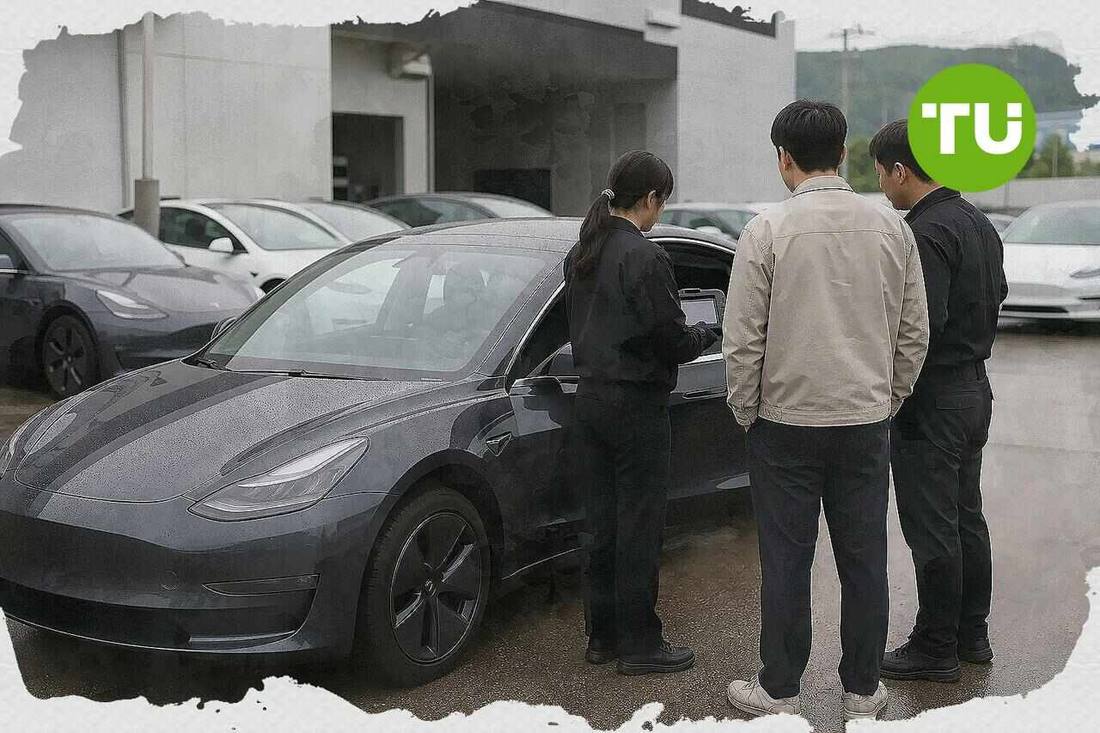
- 01THE ANNOUNCEMENT — Reuters exclusive, November 4, 2026: a South Korean consumer group plans to complain to the Fair Trade Commission on Thursday alleging misleading FSD marketing; Reuters reviewed the complaint text.
- 02THE CONFIRMATION — Tesla Korea's head acknowledged the roughly 20% usability figure at a National Assembly hearing; the transport ministry stated FSD does not comply with local safety rules; the Fair Trade Commission confirmed it opened an advertising investigation earlier this year.
- 03THE WATCHPOINT — Whether the complaint is filed on Thursday as planned, whether a temporary ban is issued, and progress on the FSD certification application for China-made vehicles.
WHAT HAPPENEDWhat Happened
Reuters reported exclusively on November 4, 2026 that the South Korean consumer group Citizens United for Consumer Sovereignty plans to file a complaint on Thursday with the Korea Fair Trade Commission (KFTC), alleging that Tesla has for years marketed Full Self-Driving (Supervised) software to South Korean consumers even though the software can legally be used in only about 20% of Tesla vehicles registered in South Korea. Reuters reviewed the as-yet-unpublished complaint text; the complaint had not been reported before.
The line between usable and unusable runs along country of origin: the usable roughly 20% are US-made vehicles, whose compliance with US vehicle safety standards is recognized by South Korea under the Korea–US free trade agreement. Most of the rest are China-made vehicles, with no equivalent agreement. Tesla Korea head Seo Young-deuk acknowledged the roughly 20% figure at a National Assembly hearing last month and said the company had not at that time formally applied to the transport ministry for FSD testing; two weeks later, Tesla filed a certification application. In a statement provided to lawmakers, the transport ministry said FSD does not comply with local Korean safety rules, including the requirement that drivers keep their hands on the steering wheel.
The scale of the charges is central to the complaint: Tesla for years charged a one-time fee of 9,043,000 won (about $6,726) for FSD, switching in August this year to a subscription of 150,000 won (about $112) per month. Data Tesla submitted to the National Assembly shows it has sold more than 170,000 Shanghai-made vehicles in South Korea since 2023; sales of China-made vehicles that cannot use FSD have grown more than fivefold since 2023, and 99% of Teslas newly sold in South Korea last year cannot legally use FSD. The complaint also alleges that Tesla last year promoted FSD as "coming soon" and filmed demonstration videos in South Korea without clearly disclosing that only a small share of vehicles on sale could use it.
Regulators have already moved: a KFTC official confirmed to Reuters that the agency opened an investigation into Tesla's FSD advertising earlier this year and has received the company's written response, but declined to give further details. The consumer group is asking the Commission to issue a temporary ban on FSD marketing for vehicles where it does not apply, impose administrative fines, and refer the matter to national investigative authorities. Tesla did not respond to Reuters' request for comment. Reuters also noted that FSD is not autonomous driving and still requires active driver supervision.
WHY IT MATTERSThe complaint is unfiled; the news lies in the reviewed text and the open investigation
The timing of this story needs to be clear: the complaint is planned for filing on Thursday and had not been submitted when Reuters published. What is established is two things — the complaint text Reuters reviewed, and the advertising investigation the Fair Trade Commission opened earlier this year. Writing a "planned complaint" as "already penalized" would overstate the progress.
The substantive risk to Tesla's Korean business is not a single complaint, but whether the investigation and certification tracks converge. The certification application was filed only two weeks ago, and the transport ministry has already stated that FSD does not comply with local safety rules. If the Fair Trade Commission finds the marketing misleading, a temporary ban would directly cut off FSD sales language for vehicles where it does not apply.
WHY IT MATTERSUsability determined by origin is a structural problem in the Korean market
Placed side by side, the roughly 20% and 99% figures turn the question from individual marketing into structure: Teslas sold in South Korea are predominantly China-made, while legal eligibility to use FSD hinges on recognition of US standards. Software pricing is globally uniform, but compliance eligibility is carved up by origin — consumers pay the same money and receive different rights of use.
Tesla this year passed BMW to become South Korea's top imported car brand; the larger its sales base, the larger the stock of vehicles where FSD does not apply. The verifiable milestones ahead are concrete: whether the complaint is filed on Thursday as planned, whether the Fair Trade Commission issues a temporary ban, and how far the FSD certification application for China-made vehicles proceeds.
SIGNAL JUDGMENT — ANALYSISThe signal is usage rights split by origin, not the software itself
Tokenta Signal's judgment: the signal in this story is not whether FSD technology works, but that a single software fee has been split by origin into two different rights of use in the Korean market. US-made vehicles are usable because the free trade agreement recognizes US standards; China-made vehicles remain uncertified, and 99% of vehicles newly sold last year cannot legally use FSD. Even before the complaint is filed, the Fair Trade Commission's open investigation and the transport ministry's compliance position have turned marketing language into a regulatory problem. The next milestone is Thursday's filing and whether a temporary ban follows.
WHAT REMAINS UNCERTAINWhat Remains Uncertain
EVIDENCEEvidence
Reuters' exclusive report of November 4, 2026 was opened and verified in full. TradersUnion and InvestingLive's same-day follow-ups are rewrites of the same Reuters exclusive.
PRIMARY SOURCESPrimary Sources
- Reuters exclusive report
https://www.reuters.com/business/autos-transportation/tesla-misled-south-korean-customers-about-automated-driving-tech-consumer-group-2026-11-04/ - TradersUnion follow-up (rewrite of the same Reuters exclusive)
https://tradersunion.com/news/companies/show/4084591-tesla-faces-korea-fsd-complaint/ - InvestingLive follow-up (rewrite of the same Reuters exclusive)
https://investinglive.com/stocks/tesla-misled-south-korean-buyers-over-full-self-driving-consumer-group-alleges/
RELATEDRelated Intelligence
- Microsoft Winds Down Its Oracle AI Cloud Rental as Older Nvidia Chips Fall Behind
- An Unreleased Anthropic Model Proved an 18-Year-Old Quantum Conjecture, Machine-Checked in Lean
- IBM Unveils Quantum System Two in Chicago, Its Most Advanced Computer Yet, Powered by Nighthawk
- Vistra Posts $1.14B Q3 Profit as Power EBITDA Jumps Over 50%, Lifts 2026 Outlook