
OpenAI Promises to Pay Its Own Power Bills as Data Centers Lose at the Ballot Box
OpenAI published a National Community Compact and a Compute Campus Policy Blueprint on November 5, 2026, pledging future owned-and-operated campuses will pay their full electricity and infrastructure costs, publish site-level water and power use, and stop asking public officials to sign NDAs, while asking lawmakers to make the same rules binding industry-wide.
- 01THE DOCUMENTS — OpenAI published a National Community Compact and a Compute Campus Policy Blueprint on November 5, 2026.
- 02THE PROMISES — Future campuses OpenAI owns and operates will pay the full cost of their electricity and infrastructure, publish site-level water and power use, and stop asking public officials to sign NDAs.
- 03THE WATCHPOINT — Whether state utility commissions turn the blueprint's ask into binding tariffs, and whether rivals adopt the same terms; the compact itself is voluntary and self-checked.
WHAT HAPPENEDWhat Happened
OpenAI published a National Community Compact and a Compute Campus Policy Blueprint on November 5, 2026, pledging that every future compute campus it owns and operates will pay the full cost of its electricity and the infrastructure needed to serve it, publish site-level water and power use, and stop asking public officials to sign non-disclosure agreements.
The compact follows OpenAI's January 20, 2026 Stargate Community commitments and its November 2 Grid Protectors program, and it lands one day after midterm voters rejected data centers in 40 of 41 local ballot measures. OpenAI's chief global affairs officer, Chris Lehane, told Axios on November 1 that a policy push would follow the midterms, calling the election 'a bit of a movie trailer' for the 2028 presidential race.
Each future campus gets its own local compact shaped by residents, with a local point of contact and an annual public report. In Effingham County, Georgia, OpenAI has committed $80 million to community priorities, including a $4.8 million grant for free school meals for all 14,000 students in the county; in Pike County, Ohio, it has made a joint $6 million childcare commitment with SB Energy.
WHY IT MATTERSA ballot-box problem gets a policy answer
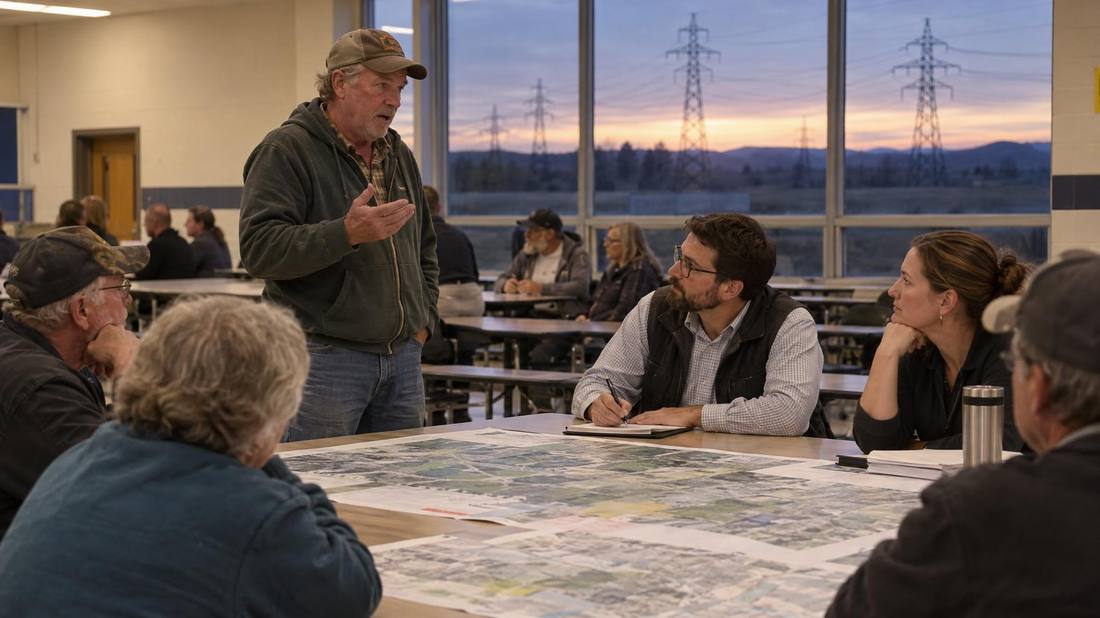
Voters have just shown that data centers can lose elections, and OpenAI is building campuses in Georgia, Ohio and Texas, three of the states that turned against them. The compact is timed for the day after the vote, and its most pointed promises answer the exact complaints on the ballot: rising power bills, secrecy deals with local officials, and water use.
The Georgia Power arrangement shows what the promise looks like in practice. The utility can cut up to 1,000 megawatts of supply to the Effingham County campus during peak demand, and the Project Camellia contract covers 3.2 gigawatts delivered in phases between 2028 and 2032.
WHY IT MATTERSVoluntary today, a lobbying ask for tomorrow
The compact binds only OpenAI's own future campuses and is checked by OpenAI itself, so its immediate force is reputational. The blueprint is where the leverage sits: it asks state utility commissions to make large customers pay the grid costs they create, and asks for public tax-incentive terms with measurable commitments and clawbacks if a developer falls short.
If regulators adopt those rules, OpenAI's unilateral concession becomes an industry floor, and rivals pay the same costs. If they do not, the compact remains a promise OpenAI grades itself on. The test to watch is whether any state commission turns the ask into a tariff.
SIGNAL JUDGMENT — ANALYSISBuying social license after voters showed data centers can lose
Tokenta Signal's judgment: OpenAI is buying social license the day after voters showed data centers can lose elections. Paying its own power bills and dropping NDAs costs it little where it already planned to build, while the blueprint asks lawmakers to impose the same costs on rivals. The test is whether any state commission turns the ask into a tariff; until then the compact is a promise OpenAI grades itself on.
WHAT REMAINS UNCERTAINWhat Remains Uncertain
EVIDENCEEvidence
OpenAI's own post, opened and verified directly: 'Today we're publishing our National Community Compact and a Compute Campus Policy Blueprint,' setting out what communities can expect at future campuses OpenAI owns and operates, including paying the full cost of electricity and infrastructure, publishing site-level water and electricity use, and not using NDAs with public officials. MadRobot's same-day report, published 2026-11-05T11:04:00Z, confirms the documents and the 40-of-41 ballot figure; Unite.AI confirms the November 5 publication and the Effingham and Pike County commitments.
PRIMARY SOURCESPrimary Sources
- OpenAI: Setting a new standard for responsible AI infrastructure
https://openai.com/index/setting-new-standard-responsible-ai-infrastructure - Unite.AI: OpenAI Publishes Community Compact and AI Campus Policy Blueprint
https://www.unite.ai/openai-publishes-community-compact-and-ai-campus-policy-blueprint/ - MadRobot: OpenAI promises data centre towns it will pay its own power bills
https://madrobot.blog/2026/11/05/openai-community-compact-data-centres-power-bills/
RELATEDRelated Intelligence
- Microsoft Winds Down Its Oracle AI Cloud Rental as Older Nvidia Chips Fall Behind
- An Unreleased Anthropic Model Proved an 18-Year-Old Quantum Conjecture, Machine-Checked in Lean
- IBM Unveils Quantum System Two in Chicago, Its Most Advanced Computer Yet, Powered by Nighthawk
- Vistra Posts $1.14B Q3 Profit as Power EBITDA Jumps Over 50%, Lifts 2026 Outlook