
Meta Opens Muse Voice to All US Users: Talk to Your AI Agent Face to Face
Meta rolled out Muse Voice to all U.S. users on November 5, 2026, adding real-time voice conversations and expressive avatars to Muse, its personal AI agent, on mobile, web and Mac; the Muse Realtime Avatar and Muse Realtime Voice system renders a customizable animated character that speaks with synchronized expressions and gestures, with AI Glasses and the Muse Charm wearable to follow.
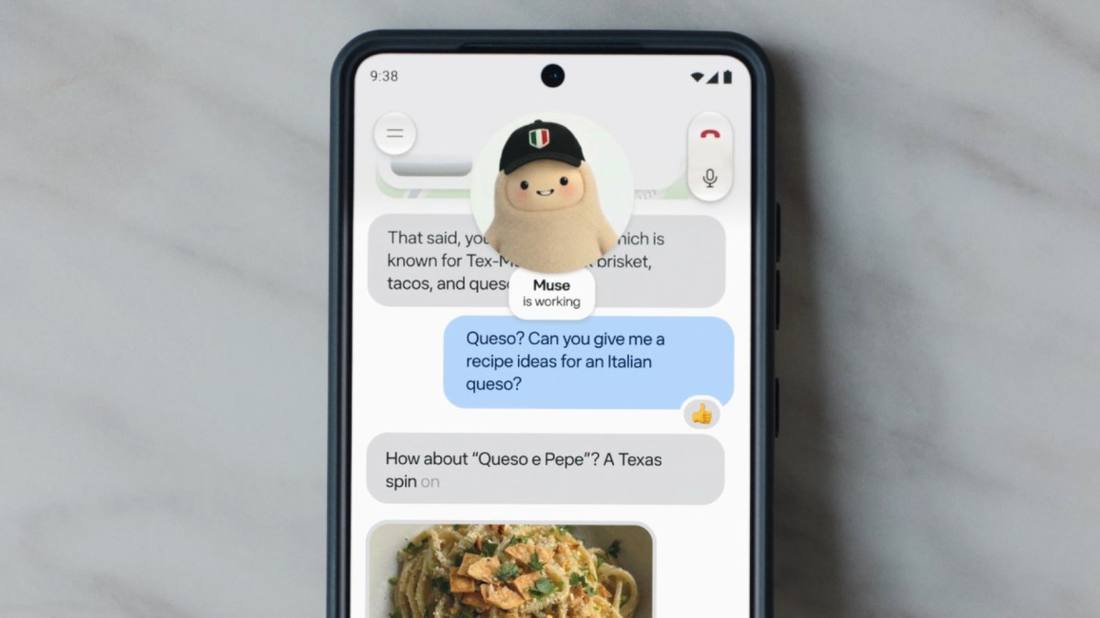
- 01THE ANNOUNCEMENT — Meta announced on November 5, 2026 that Muse Voice, real-time voice conversations and expressive avatars for Muse, is rolling out now to everyone in the U.S. on mobile, web and Mac.
- 02THE CONFIRMATION — Meta's official blog post was opened and verified in full, and TechCrunch confirmed the rollout the same day, agreeing on the platforms, the avatar customization and the coming AI Glasses and Muse Charm support.
- 03THE WATCHPOINT — Whether users adopt the avatar as a daily interface, and whether the experience holds up when it moves onto Muse Charm before year-end and onto AI Glasses.
WHAT HAPPENEDWhat Happened
Meta announced on November 5, 2026 that Muse Voice is rolling out now to everyone in the United States, bringing real-time voice conversations and expressive avatars to Muse, its personal AI agent, in the Muse app on mobile, web and Mac. Users tap the phone icon in the top-right corner to start talking. The feature was previewed at Meta Connect 2026 on September 23, two months after Muse launched on September 8.
The rollout pairs two technologies Meta Superintelligence Labs built as one streaming system: Muse Realtime Voice, which produces a stream of speech tokens carrying both content and delivery, and Muse Realtime Avatar, an audio-driven Diffusion Transformer that turns the same stream into a live animated performance, with lip motion, expressions and gestures synchronized to the voice. Users can interrupt mid-sentence, and Muse keeps working on tasks in the background while the conversation continues.
Meta's default avatar is a character nicknamed Jolly, and users can customize the avatar to look like a person, an animal or another character, and choose from hundreds of voices, from the energy of a New Yorker to the flair of a pirate, in Meta's own examples. The avatar can stay voice-only, sit beside the conversation, or go full screen for a face-to-face talk. The service is for users aged 18 and older.
Meta announced the rollout in a blog post and on X, where chief AI officer Alexandr Wang shared a demo of his own Muse, a fluffy white dog, responding to his request for advice. Meta says voice conversations are coming soon to its AI Glasses and to Muse Charm, the Tamagotchi-like wearable device Meta plans to launch before year-end, where the avatar will appear on a small screen.
WHY IT MATTERSThe avatar is the interface bet
Every other frontier assistant now talks: ChatGPT, Gemini and Claude all ship voice modes. Meta's differentiator is not the voice but the face. An animated avatar that reacts while you talk, with expressions matched to tone, is a bid to make the agent feel like a companion rather than a tool, and Meta is explicit that the goal is connection: the more human the agent feels, the more users will talk to it.
That bet carries the same risk as every anthropomorphic interface. A face that nods along invites trust the model has not earned, and Meta's own research post cautions that its demo examples do not all reflect avatars available in the app. Whether users treat Jolly as a character to chat with or as a gimmick on top of a task agent will decide whether this is a durable interface or a launch-week novelty.
WHY IT MATTERSA rollout timed for the hardware that follows
The timing is not accidental. Muse Charm, the pocket device built entirely around talking to Muse, is due before year-end, and AI Glasses support is next. The U.S. app rollout is the rehearsal: get millions of users talking to an avatar on screens they already own, then move the same interaction onto hardware where voice is the only interface.
Meta's research team reports the system renders 448-by-768 portrait video at 25 frames per second with about 870 milliseconds from the end of a user's turn to the first synchronized response, and stamps generated avatar video with an invisible Meta Video Seal watermark. Those numbers are the floor the hardware version has to meet: on a two-inch screen with no keyboard, latency and lip-sync are the whole product.
SIGNAL JUDGMENT — ANALYSISThe face is the product, not the voice
Tokenta Signal's judgment: voice alone is table stakes now, every frontier assistant talks. What Meta is actually shipping is a face: an avatar that reacts while you talk, designed to make users feel connected to an agent that does their work. That is a real differentiator if it holds, and a real trust risk if users confuse a nodding character with a reliable one. Watch the hardware: Muse Charm before year-end is where this interface either becomes the default way people talk to an agent, or stays a demo inside an app.
WHAT REMAINS UNCERTAINWhat Remains Uncertain
EVIDENCEEvidence
Confirmed by two sources: Meta's official blog post and TechCrunch same-day coverage, with the announcement also posted on X by Meta chief AI officer Alexandr Wang. Original links opened and verified.
PRIMARY SOURCESPrimary Sources
- Meta official blog: Give Your Muse a Voice
https://about.fb.com/news/2026/11/introducing-muse-ai-voice-expressive-avatars/ - TechCrunch: Meta says US users can now video chat with their Muse AI avatar
https://techcrunch.com/2026/11/05/meta-says-us-users-can-now-video-chat-with-their-muse-ai-avatar/ - Unite.AI: Meta Brings Real-Time Voice and Expressive Avatars to Muse
https://www.unite.ai/meta-brings-real-time-voice-and-expressive-avatars-to-muse/
RELATEDRelated Intelligence
- Microsoft Winds Down Its Oracle AI Cloud Rental as Older Nvidia Chips Fall Behind
- An Unreleased Anthropic Model Proved an 18-Year-Old Quantum Conjecture, Machine-Checked in Lean
- IBM Unveils Quantum System Two in Chicago, Its Most Advanced Computer Yet, Powered by Nighthawk
- Vistra Posts $1.14B Q3 Profit as Power EBITDA Jumps Over 50%, Lifts 2026 Outlook