
Chip Design Software Starts Running Its Own Models
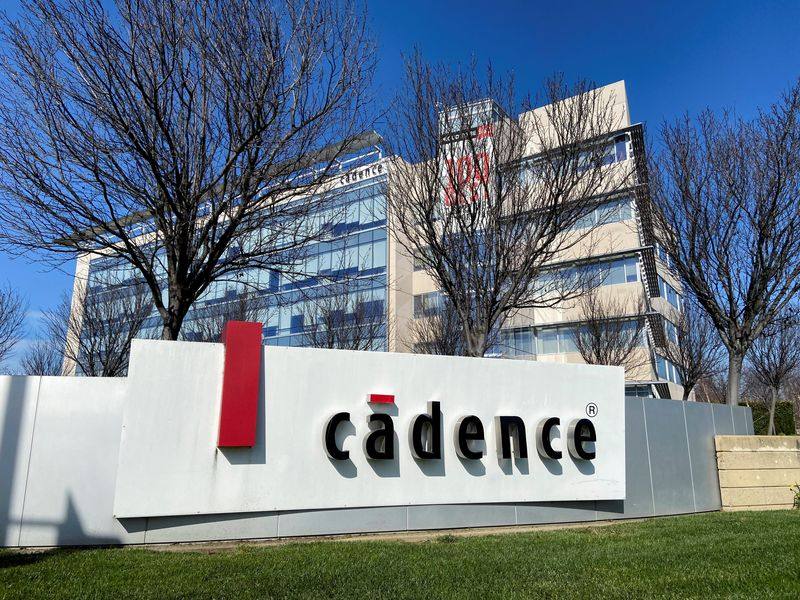
On October 26 Cadence launched Maestro, a chip-design AI model suite based on Nvidia Nemotron that can run inside customer firewalls, a head-on fork from Synopsys' OpenAI-hosted route.
- 01THE RIVAL — On September 30, Synopsys announced its OpenAI partnership, with models on OpenAI-hosted infrastructure.
- 02THE LAUNCH — On October 26, Cadence launched Maestro, based on Nemotron and OpenShell.
- 03THE CHOICE — Three deployment choices: Cadence's cloud, a public cloud, or inside the customer's firewall.
WHAT HAPPENEDWhat Happened
On October 26, Cadence launched the Maestro model suite: a set of AI models tuned for chip design, partly based on Nvidia's open-weight Nemotron models and hardened with Nvidia's OpenShell security technology.
Maestro's selling point is not just the models but deployment choice: customers can run them on Cadence's own cloud, on any public cloud, or entirely inside their own firewalls and data centres. Chip design files never have to leave the building.
The early results are company-reported: up to 30% better quality than general-purpose models and up to 5x token efficiency. On launch day, Cadence shares rose 3.9%.
THE FORKThe Fork with Synopsys Is the Real Story Here
A month earlier, Synopsys had announced a partnership with OpenAI to develop GPT-Synopsys, with models running on OpenAI-hosted infrastructure and revenue shared with OpenAI. Cadence's Maestro runs exactly the other way: the models can be taken home.
The two routes rest on two trust assumptions: trust cloud hosting, or trust the firewall. Chip design files are a semiconductor company's most core asset, and deployment location is itself a product feature.
THE AGNOSTICModel-Agnostic Is Cadence's Defensive Wall
A remark by Cadence senior vice president Paul Cunningham is worth recording: there are more AI model vendors than chip design software vendors. Maestro is positioned as model-agnostic: frontier models, open weights and specialised models can be mixed, routed and combined.
The implication is that Cadence does not want to be locked in by any single model vendor, and does not want its customers locked in either. The platform's value sits in the orchestration and evaluation loop, not in any one model.
THE CAVEATSelf-Reported Numbers Need Customers' Own Verification
The 30% and 5x figures come from Cadence's early testing, with no reproducible test set and no public definition of quality. Analysts have already noted that, depending on the token mix, the total cost reduction can differ completely.
The first models go only to selected early customers, with delivery starting in the fourth quarter of 2026. The real verification will not be in the launch release but in customers' own design flows.
THE SHIFTWhat Changed
SIGNAL JUDGMENT — ANALYSISOwnership of Chip Design Files Is Becoming a Product Feature
The fork between Maestro and GPT-Synopsys is not about model capability but about where design files live. Tokenta Signal's judgment is unchanged: in the next round of AI competition in EDA, the deciding factor is deployment trust, not parameter scale.
WHAT REMAINS UNCERTAINWhat Remains Uncertain
EVIDENCEEvidence
Key points confirmed from the original report: Reuters reported on October 26 that Cadence launched Maestro, based on Nvidia Nemotron open weights and OpenShell security technology, runnable on Cadence's cloud, public clouds or inside customer firewalls, with company-reported quality gains of up to 30% and token efficiency of up to 5x.
PRIMARY SOURCESPrimary Sources
- Reuters via 947 The Beast: Cadence unveils suite of AI models that chipmakers can run in-house
https://947thebeast.com/2026/10/26/cadence-unveils-nvidia-backed-ai-models-that-chipmakers-can-run-in-house/ - Futurum Group: Cadence Maestro Brings Frontier RL to Chip Design Agents
https://futurumgroup.com/insights/cadence-maestro-puts-frontier-class-reinforcement-learning-behind-chip-design-agents/
RELATEDRelated Intelligence
- Microsoft Winds Down Its Oracle AI Cloud Rental as Older Nvidia Chips Fall Behind
- An Unreleased Anthropic Model Proved an 18-Year-Old Quantum Conjecture, Machine-Checked in Lean
- IBM Unveils Quantum System Two in Chicago, Its Most Advanced Computer Yet, Powered by Nighthawk
- Vistra Posts $1.14B Q3 Profit as Power EBITDA Jumps Over 50%, Lifts 2026 Outlook