
For the First Time, Apple Puts a Touchscreen on the MacBook
On October 28, Apple launched the MacBook Pro PROLED XDR edition in 14-inch and 16-inch sizes, with M5 Pro and M5 Max chips, up to 128GB of unified memory and 16TB of storage.
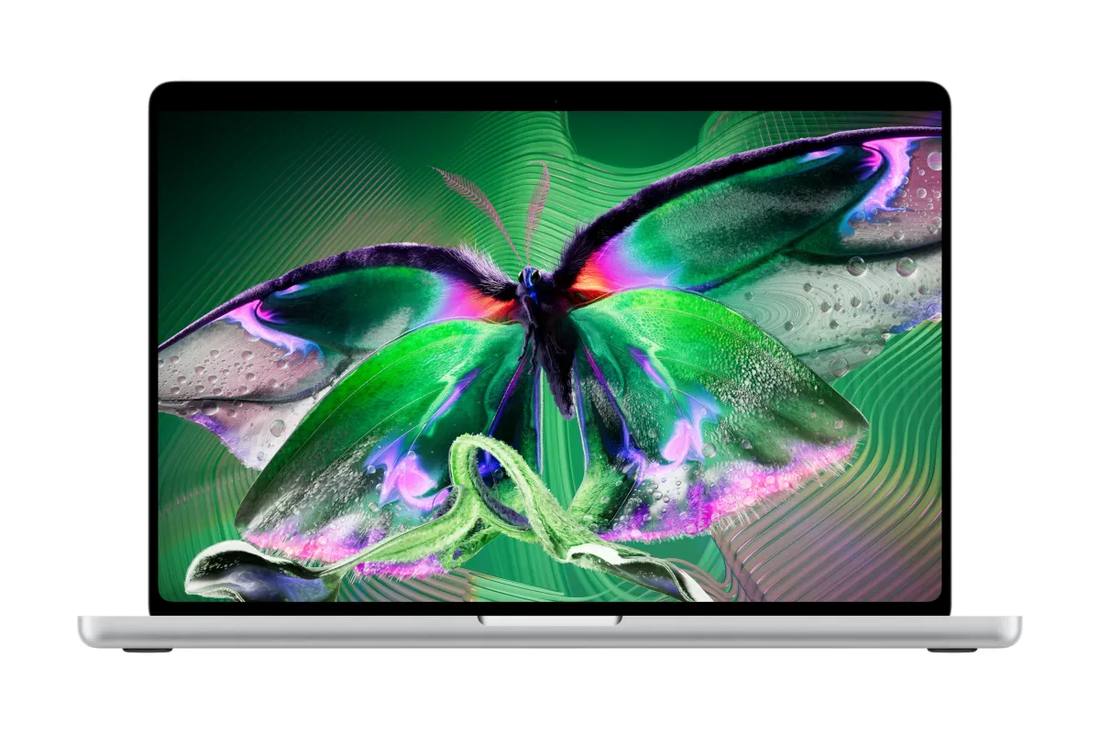
- 01THE LAUNCH — On October 28, Apple launched its first touchscreen MacBook Pro.
- 02THE SCREEN — PROLED XDR tandem OLED display with touch gesture support.
- 03THE PRICE — 14 inches at $2,899, $400 more than the LCD version with the same configuration.
WHAT HAPPENEDWhat Happened
On October 28, Apple launched its first touchscreen MacBook Pro, with a display named PROLED XDR using a tandem OLED panel that supports touch gestures. The 14-inch model starts at $2,899 and the 16-inch at $3,399; pre-orders opened on October 28 and sales begin November 6.
The cost of touch is calculated clearly: the LCD version with the same configuration starts at $2,499 for 14 inches and $2,999 for 16 inches, and the touchscreen OLED version costs exactly $400 more. Chips, memory and storage specifications are identical, and battery life is unchanged; the $400 buys the screen and touch.
Apple did not replace the old models with the touchscreen version; the LCD models remain on sale. Touchscreen app versions arrive later: Apple named Notion, Canva, Zoom, Office, Lightroom, DaVinci Resolve and Blender, with footnotes noting the relevant versions will follow.
A $400 EXPERIMENT$400 Is a Pricing Experiment
Apple is not forcing anyone to pay: the touchscreen and LCD versions are sold side by side. The $400 difference is a direct market test of how much touch is worth.
If the touchscreen version sells well, the next generation's default configuration changes. If it does not, touch stays on the high-end line.
HARDWARE FIRST, APPS LATERHardware First, Apps Later
The hardware ships first and touch-optimized apps arrive afterward, which means early users get a touchable screen first, with mature touch workflows still to come.
Apple's app list is long; the delivery cadence is what matters. A list is not an experience.
A STANCE SHIFTSThe Shift in Stance Is Worth Recording More Than the Product
Apple publicly opposed touchscreens on the Mac for years, citing arm fatigue and unnatural interaction. This launch does not retract that reasoning; it hands the choice to users willing to pay $400.
Turns in product strategy often start with a single high-end product line.
THE SHIFTWhat Changed
SIGNAL JUDGMENT — ANALYSISThe Real Test for a Touchscreen MacBook Is Apps, Not the Screen
Tokenta Signal's judgment is unchanged: what Apple is selling this time is a $400 option, with touch as the vehicle. Whether touch becomes the Mac's default interaction depends on whether the app ecosystem keeps up.
WHAT REMAINS UNCERTAINWhat Remains Uncertain
EVIDENCEEvidence
Key points confirmed from the original report: on October 28, Apple launched its first touchscreen MacBook Pro with a PROLED XDR tandem OLED display, at $2,899 for 14 inches and $3,399 for 16 inches, on sale November 6; the LCD version with the same configuration is $400 cheaper; touchscreen app versions arrive later.
PRIMARY SOURCESPrimary Sources
- TechCrunch: Apple launches its new touchscreen MacBook Pro
https://techcrunch.com/2026/10/28/apple-launches-its-new-touchscreen-macbook-pro/ - MacRumors: Apple's Touchscreen MacBook Pro Could Ship 1.5M Units in 2027
https://www.macrumors.com/2026/10/30/oled-macbook-pro-1-5m-shipments-2027/
RELATEDRelated Intelligence
- Microsoft Winds Down Its Oracle AI Cloud Rental as Older Nvidia Chips Fall Behind
- An Unreleased Anthropic Model Proved an 18-Year-Old Quantum Conjecture, Machine-Checked in Lean
- IBM Unveils Quantum System Two in Chicago, Its Most Advanced Computer Yet, Powered by Nighthawk
- Vistra Posts $1.14B Q3 Profit as Power EBITDA Jumps Over 50%, Lifts 2026 Outlook